
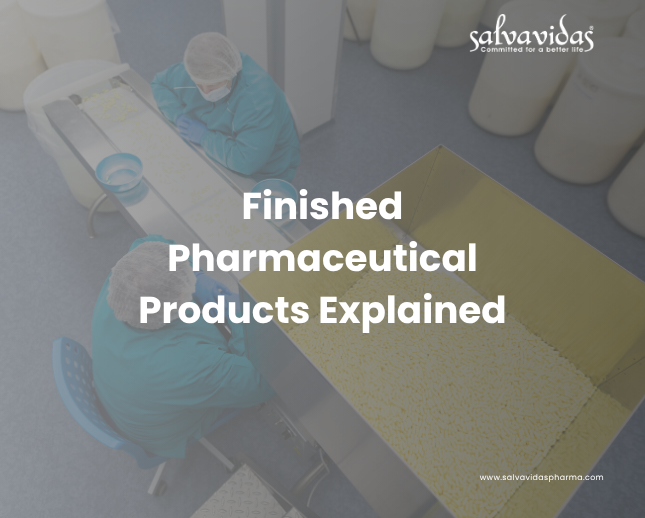
In the worldwide pharmaceutical industry, finished pharmaceutical products (FPPs) provide vital support to healthcare systems. Exemplars of these are tablets, capsules, and injectable drugs, which are prepared for use after undergoing thorough manufacturing and market scrutiny. Their significance lies not only in their therapeutic value but also in their global demand and contribution to public health infrastructure. As a vital component of the pharmaceutical supply chain, finished pharmaceuticals are regulated, standardized, and distributed across international markets – especially from hubs like India, renowned for its reliable pharmaceutical manufacturing. The blog explores the scope of finished pharmaceutical products, elucidating basic definitions, classifications, and distinctions from semi-finished products, steps in manufacturing, global usage, and the reasons why India is regarded as a prominent hub for such drugs. What is a Finished Pharmaceutical Product? Definition of Finished Pharmaceutical Products Finished pharmaceutical products are the result of the entire production process, which includes assembling the formulation, packaging, and labeling of the product to make it ready for consumer use. According to definitions provided by pharmaceutical regulatory frameworks such as those of WHO and FDA, an FPP contains one or more active pharmaceutical ingredients (APIs) along with suitable excipients, and is processed, labeled, and packed for administration. In simpler terms, finished pharmaceutical products are the consumable or administrable forms of medicine that a patients use – fully processed and quality-checked. Finished Dosage Form Meaning The finished dosage form refers to the final physical presentation of the pharmaceutical product as intended for patient administration. These include tablets, capsules, syrups, ointments, injections, and other formulations. Each form determines a specific route of administration (oral, topical, intravenous, etc.) and significantly influences both the drug’s therapeutic performance and patient compliance. In this context, while every pharmaceutical product available in the market is a finished dosage form, not every dosage form is considered a finished product until it has been fully processed, packaged, and labeled in accordance with regulatory requirements, making it suitable for distribution. Types of Finished Pharmaceutical Products Finished pharmaceutical products are categorized based on their dosage form and route of administration. Common types include: Oral Solids: Tablets, capsules, chewable tablets, dispersible tablets. Liquids: Syrups, suspensions, elixirs, oral drops and eye/ear drops. Injectable: Vials, ampoules, prefilled syringes and infusions for intravenous or intramuscular use. Topical Formulations: Creams, ointments, gels, lotions and dusting powders. Inhalers & Suppository Forms: Nasal sprays, Metered Dose Inhalers (MDI), and rectal or vaginal suppositories Finished pharmaceuticals may also be differentiated by their packaging formats – such as blister packs, bottles, strip packs, or ready-to-use kits – tailored for export to markets in Africa, Latin America, or Southeast Asia. Finished vs. Semi-Finished Pharmaceutical Products A semi-finished pharmaceutical product refers to a formulation that has undergone partial processing but is not yet ready for patient use. It typically lacks final packaging, labeling, and in some cases, the complete dosage form. Key Differences: Finished Product: A fully formulated and packaged product that is ready for distribution and administration. Semi-Finished Product: A partially processed product that still requires further formulation, filling, or packaging steps. The concept of semi-finished products is particularly relevant in B2B pharmaceutical trade, when the final stages of drug preparation – such as packing or labeling are completed in the importing country due to regulatory requirements, or logistical considerations. Manufacturing Process of Finished Pharmaceutical Products The production of a finished pharmaceutical product follows a highly controlled, multi-stage process designed to ensure the safety, efficacy, and quality of the final product: API Procurement: Selection and sourcing of active pharmaceutical ingredients (API) from certified sources and quality-tested suppliers. Formulation: Combining the API with appropriate excipients, based on the requirements of the intended dosage form. Mixing/Blending: Homogenizing all components to achieve a uniform and consistent mixture. Dosage Form Creation: Manufacturing the specific form—such as tablets, capsules, or liquid solutions—which involves processes like compression, encapsulation, or filling. Coating & Polishing: Applied as needed for taste masking, improved appearance, or controlled drug release. Packaging & Labeling: Executed in compliance with regulatory guidelines specific to the destination market. Pharmaceutical manufacturers such as Salvavidas Pharma, a leading pharmaceutical company in India, ensure that each finished product adheres to global standards by following WHO-GMP, ISO, and other certifications. Batch traceability and impeccable documentation, aligned with the specifications of the export market—are essential components of the quality assurance process. Uses & Applications of Finished Pharmaceutical Products (FPPs) Globally, finished pharmaceutical products are vital to: Domestic Healthcare: Utilized across public and private healthcare sectors, including hospitals, pharmacies, and clinics. Government Supply Programs: Distributed through national healthcare initiatives & healthcare programs. International Demand: Regions such as Africa, the Middle East, Latin America LATAM, and parts of Asia where healthcare infrastructure is expanding rapidly. FPPs are used for a wide spectrum of needs – from acute treatments to chronic disease management, preventive care, and emergency response through ready-to-deploy medical kits. Public health systems rely on their consistent availability, standardized quality, and regulatory compliance to meet the evolving demands of global healthcare. Why Choose India for Finished Pharmaceutical Products? India holds a prominent position in global pharmaceutical exports due to: Cost-Effectiveness: High-quality medicines produced at competitive pricing. Regulatory Advantage: Manufacturing facilities accredited by WHO-GMP, and other global regulatory bodies. Contract Manufacturing: Customizable production models that align with international partners. Export and Logistics: Reliable supply chains capable of handling both bulk shipments and retail-ready packaging across global markets. Pharmaceutical companies such as Salvavidas Pharma are recognized for exporting a diverse portfolio of finished formulation products, supported by therapeutic consistency, strict regulatory adherence, and efficient international distribution networks. Conclusion Understanding what constitutes a finished pharmaceutical product is essential for stakeholders across the healthcare ecosystem including providers, distributors, policymakers, and importers in the global pharmaceutical trade. These fully processed medicines form the foundation of both therapeutic and preventive healthcare worldwide. Whether for government tenders, hospital supply chains, or private-sector distribution, partnering with a globally certified manufacturer ensures quality and compliance. Choosing a trusted company offering cost-effective, WHO-GMP-compliant finished formulations such as Salvavidas Pharma is a strategic decision for any organization

What are APIs in the Pharmaceutical Industry? APIs, or Active Pharmaceutical Ingredients, are the core components of any drug. They’re what do the job of treating the condition, whether that’s killing bacteria, reducing pain, or balancing hormones. Imagine a capsule. The outer part is just a shell, but inside lies the magic: the API. Without it, medicine is just colored powder. Why is India a Hub for API Production? India has become the powerhouse of the global pharmaceutical supply chain. Why? It’s a combo of talent, tech, and cost. Indian pharma companies are known for delivering world-class APIs at competitive prices. Plus, many Indian manufacturers are approved by global regulatory agencies – think USFDA, MHRA, and WHO. That’s no small feat. Understanding the API Market What Makes an API “High Quality”? High-quality APIs meet stringent purity, safety, and efficacy standards. They must be consistent in composition, produced under strict manufacturing protocols, and free of harmful impurities. Quality isn’t just about how good the product looks — it’s about how it performs. If it’s not consistent, it’s not reliable. Importance of GMP and Regulatory Compliance GMP – Good Manufacturing Practices – is the gold standard in pharma. A facility following GMP ensures hygiene, traceability, validated processes, and trained staff. Compliance = trust. API vs Formulation: The Core Difference APIs are the ingredient. Formulations are the final dish (tablet, capsule, syrup). API is the spice that makes the food effective! India’s Strength in API Manufacturing Cost-Efficiency and Skilled Labor India offers top-notch quality at almost half the cost of Western manufacturers. Skilled chemists, engineers, and a solid pharma education system back this advantage. Infrastructure and Technological Capabilities India’s pharma parks and API clusters are well-equipped with R&D labs, automated plants, and testing facilities. It’s not just about manpower – it’s about smart manufacturing. Government Support and Policies Initiatives like the Production Linked Incentive (PLI) scheme are encouraging companies to scale up API manufacturing. India is reducing its dependency on China and building self-sufficiency. Top API Exporting Companies in India Salvavidas Pharmaceutical Pvt. Ltd. Major API Products Salvavidas Pharma produces APIs for cardiovascular, anti-infectives, neurology, and oncology medicines. Sun Pharmaceutical Industries Ltd. Major API Products Sun Pharma produces APIs for cardiovascular, anti-infectives, neurology, and oncology medicines. Global Export Footprint With operations in over 100 countries, Sun Pharma is a trusted name in the API export game. Aurobindo Pharma Manufacturing Capabilities Aurobindo has multiple API facilities approved by global regulators. Their vertical integration ensures quality and affordability. Regulatory Approvals USFDA, EDQM, and Japan’s PMDA have cleared many of Aurobindo’s plants Dr. Reddy’s Laboratories Their APIs are used by top brands in the U.S. and Europe. Dr. Reddy’s invests heavily in R&D and is often the first to launch complex generics. Lupin Limited Lupin’s APIs cover cardiovascular, anti-TB, and CNS segments. They operate WHO-GMP and USFDA-compliant facilities. Divi’s Laboratories A global leader in custom synthesis, Divi’s specializes in high-purity APIs and intermediates. They serve big clients like Pfizer and Teva. Cipla Ltd. Cipla has decades of experience in both APIs and finished dosages. They export to over 80 countries, with robust quality controls. Glenmark Life Sciences Focused entirely on APIs, Glenmark Life Sciences is growing fast, particularly in regulated markets. Regulatory Standards Followed by Indian API Companies USFDA, EMA, WHO-GMP Certifications Top Indian companies maintain internationally accredited facilities. These certifications aren’t just stickers — they’re the result of rigorous audits. Audits and Compliance Processes Third-party and customer audits are common in India. Companies invest in continual improvement to pass inspections without issues. How to Identify the Right API Exporter Key Certifications to Check Look for WHO-GMP, USFDA, CEP (Europe), ISO 9001 certifications. These are strong indicators of a manufacturer’s commitment to quality. Product Portfolio Review Evaluate if the company offers APIs relevant to your formulations. A broad portfolio usually means strong R&D capabilities. Customer Reviews and Case Studies Testimonials, long-term partnerships, and case studies show real-world performance. Don’t ignore the power of word-of-mouth. Challenges Faced in API Export Supply Chain Disruptions Geopolitical issues, raw material shortages, or shipping delays can disrupt timelines. Reliable suppliers build contingency plans. Regulatory Hurdles Even if a product is top quality, it must pass every region’s local laws. Indian firms have learned to navigate this maze well. Environmental and Quality Concerns With increased scrutiny on pollution and waste disposal, Indian manufacturers are now adopting eco-friendly, compliant processes. Future of API Export from India Innovations in Green Chemistry India is pushing toward green synthesis, minimizing toxic waste, and embracing sustainable methods – which also means long-term cost savings. Expansion in Global Markets Africa, Latin America, Southeast Asia – these are booming markets for Indian APIs. With increased bilateral trade agreements, the sky’s the limit. Conclusion India’s pharmaceutical sector is a global engine for high-quality API production and export. With strong infrastructure, competitive pricing, skilled talent, and global certifications, Indian API manufacturers are a reliable choice for pharmaceutical companies worldwide. If you’re looking for trusted, certified, and quality-focused API exporters – India is where your search should begin. FAQs Q. What documents are needed for API export? Usually, you’ll need DMF (Drug Master File), Certificate of Analysis, MSDS, GMP certificate, and export licenses. Q. Are Indian APIs accepted globally? Yes, especially when manufactured under USFDA, EMA, or WHO-GMP certified facilities. Indian APIs are used in top global brands. Q. Which countries import most APIs from India? The U.S., Germany, Brazil, Japan, and the U.K. are some of the top importers of Indian APIs. Q. How to contact Indian API manufacturers? You can visit their official websites, attend pharma expos, or connect via platforms like IndiaMART, Pharmexcil, or CPhI. Q. Can I request samples before bulk purchase? Yes, most manufacturers offer sample APIs for testing and formulation trials before confirming bulk orders.

Find Manufacturers of Affordable Pharmaceutical Formulations in India Introduction Looking to source quality pharmaceutical products without burning a hole in your pocket? You’re not alone. With the global demand for affordable medicines soaring, India has emerged as a powerhouse for pharmaceutical manufacturing. Whether you’re a startup entering the healthcare market or an established business looking to cut costs, India is a goldmine for affordable pharma formulations. Let’s take a deep dive into how and where you can find trustworthy pharmaceutical manufacturers in India who deliver both quality and cost-effectiveness. Understanding Pharmaceutical Formulations What Are Pharmaceutical Formulations? Pharmaceutical formulations refer to the process of combining various chemical substances, including the active drug, into a final medicinal product. This could be anything from a simple tablet to a complex injectable. Types of Formulations Tablets & Capsules – Most common and cost-effective Syrups & Suspensions – Ideal for pediatric and geriatric use Ointments & Creams – Topical applications Injections – Requires sterile production environments Powders & Granules – Easy to transport and store Why Choose Indian Pharmaceutical Manufacturers? Cost-Effective Production India benefits from lower labour and infrastructure costs, which directly translates to cheaper products for buyers across the globe. Skilled Workforce India produces thousands of pharmaceutical graduates every year. Combine that with world-class R&D, and you’ve got a winning formula. Regulatory Compliance Most top Indian pharma companies comply with WHO-GMP, USFDA, MHRA, and other global standards, ensuring quality that rivals Western manufacturers. Infrastructure and Scalability From small batches to bulk exports, Indian manufacturers can scale production as per your requirements. Key Regions in India for Pharmaceutical Manufacturing Gujarat – The Pharma Capital Surat, Ahmedabad and Vadodara host some of the biggest pharma plants, known for bulk drug and formulation manufacturing. Maharashtra – Hub of Innovation Mumbai and Pune house giants like Cipla and Sun Pharma with high-end formulation capabilities. Himachal Pradesh – Clean and Cost-Effective Baddi is famous for its pollution-free environment and tax benefits for manufacturers. Telangana & Andhra Pradesh – Fast-Growing Players Hyderabad’s Genome Valley is a biotech and pharma hotbed, ideal for sourcing niche formulations. Top Qualities to Look for in a Pharma Manufacturer Certifications: WHO-GMP, USFDA, EU-GMP Customisation: Ability to tailor formulations to your needs Packaging: Ready-to-market private labelling options Affordability: Competitive pricing with transparency Customer Service: Dedicated points of contact How to Identify Affordable Yet Reliable Manufacturers Online Directories & B2B Portals Use platforms like IndiaMART, TradeIndia, and PharmaCompass to compare manufacturers quickly. Trade Fairs & Exhibitions Events like CPhI India are excellent for face-to-face interactions with manufacturers. Pharma Consultants Specialized agencies can help you find vetted suppliers within your budget. Networking via LinkedIn Reach out directly to decision-makers, bypassing middlemen. Noteworthy Manufacturers Offering Affordable Formulations Salvavidas Pharmaceutical Pvt. Ltd. – Known for quality and affordability. Cipla Ltd. – A global brand offering cost-effective generics. Alkem Laboratories – Offers formulations across 30+ therapeutic segments. Zydus Lifesciences – Pioneers in biosimilars and novel drug delivery systems. Intas Pharmaceuticals – Strong global presence with affordable offerings. Key Pharmaceutical Formulations in Demand Antibiotics – Amoxicillin, Azithromycin, etc. Anti-Inflammatories – Ibuprofen, Diclofenac Cardiovascular Drugs – Amlodipine, Atenolol Diabetic Care – Metformin, Glimepiride Multivitamins – Essential for immunity and general health How to Verify Manufacturer Credentials Request third-party lab reports Ask for certifications and compliance docs Go through customer testimonials Schedule virtual audits or plant visits Export Opportunities from India India is a key pharma exporter to: Africa – High demand for generic Southeast Asia – Close shipping routes South America – New emerging markets Middle East – Strategic trade partner Navigating Legal and Regulatory Landscape Familiarize yourself with: CDSCO regulations Export-import licenses Labelling and safety protocols Custom Formulations & Private Labeling Want your brand on the bottle? Indian manufacturers often offer: Customizable formulations Flexible MOQ Complete branding & packaging solutions Challenges When Sourcing from India Communication Gaps – Time zones and accents can be tricky Quality Variations – Not all suppliers are equal Shipping Delays – Factor in customs clearance time Working with a reliable exporter can solve most of these. Tips for First-Time Buyers Start Small – Test a batch before committing large orders Negotiate MOQs – Some flexibility is possible Insist on Samples – Always test before ordering in bulk Future Trends in Indian Pharma Manufacturing Rise of Biosimilars – Biotech formulations gaining traction Contract Manufacturing Growth – Companies focusing on R&D outsource manufacturing Tech Integration – Automation and AI for better quality control Conclusion Finding manufacturers of affordable pharmaceutical formulations in India doesn’t have to be a gamble. With the right research, a keen eye for certifications, and an understanding of market dynamics, you can build profitable partnerships that last. India’s pharma industry offers a unique blend of quality, cost-effectiveness, and scalability that’s hard to match elsewhere. So go ahead, explore your options, ask the right questions, and make your move toward affordable pharma success. FAQs Q1. Is it safe to import medicines from Indian manufacturers? A. Yes, provided you work with WHO-GMP-certified and verified manufacturers. Q2. How can I ensure the quality of pharmaceutical products from India? A. Request certifications, third-party lab reports, and do trial batches before scaling. Q3. What is the average lead time for pharma exports from India? A. Typically 3–6 weeks, depending on product type and destination. Q4. Can Indian manufacturers do private labelling? A. Absolutely. Many offer end-to-end solutions, including packaging and branding. Q5. What’s the minimum order quantity (MOQ) generally? A. It varies but can start as low as 1000 units for generic formulations.
Popular Blog
Categories
Monthly Archives
- March 2026
- February 2026
- January 2026
- December 2025
- November 2025
- October 2025
- September 2025
- August 2025
- July 2025
- June 2025
- May 2025
- February 2025
- January 2025
- October 2024
- August 2024
- July 2023
- April 2023
- March 2023
- February 2023
- December 2022
- November 2022
- October 2022
- September 2022
- August 2022
0