

The pharmaceutical industry is evolving rapidly, and one segment leading this transformation is the development of injectable formulations. From chronic disease treatments to advanced biologics, injectables are dominating global demand due to their rapid action, high bioavailability, and ability to deliver complex therapies. Simultaneously meeting the needs of small-batch biologic production and large-scale generic manufacturing presents one of the greatest challenges, as producers strive to keep pace with growing demand. This shift is prompting businesses to revisit their formulation strategies, equipment, and overall infrastructure. Why Injectable Formulations Are on the Rise The shift towards injectables has been underway for some time, but it is now accelerating. The use of injectables as therapeutic agents has surged due to global health emergencies, an uptick in biologic drug approvals, and the growing prevalence of chronic conditions linked to lifestyle factors. Key reasons for the growing demand: Rapid onset of therapeutic effect Direct delivery into the bloodstream Suitability for biologics and vaccines Improved patient compliance in some conditions Global Injectable Drug Market Growth (2020–2025) Biologics: The Game-Changer Injectable biologics have immense potential to transform the treatment and management of various illness. These cell-derived therapies are revolutionary in the treatment of cancer, autoimmune disorders, and rare diseases. However, they are highly sensitive to precision in formulation and handling. Unlike traditional oral medications, many biologics must be injected to preserve their structural integrity. This necessitates sterically controlled, temperature-regulated packaging to prevent contamination, ensure accurate dosing, and support other critical protocols. Collectively, these requirements make biologics manufacturing both essential and highly complex. Injectable Formulation Development: A Delicate Science Developing injectable products, especially biologics, requires more than just basic mixing. The injectable formulation development process involves: Stability studies: Ensuring the product remains potent throughout its shelf life Sterilization methods: Selecting the appropriate technique (e.g., filtration or terminal sterilization) Excipient selection: Avoiding interactions with active ingredients Delivery system compatibility: Ensuring suitability for prefilled syringes, vials, or auto-injectors Every formulation must meet global regulatory standards and maintain sterility throughout the entire process. Visual Snapshot: Market Growth of Injectable Drugs To understand the significance of injectables, consider the rapid growth of this market: From $320 billion in 2020 to an estimated $510 billion by 2025, the rise in injectable formulations reflects increasing global health demands and accelerating innovation in biologics. Inside Sterile Injectable Manufacturing Sterile injectable manufacturing requires strict environmental controls. Production takes place in highly controlled zones equipped with HEPA filters, restricted access barrier systems (RABS), and automated filling lines to prevent microbial contamination. Common technologies used: Cleanroom isolators Automated vial washing and filling machines Environmental monitoring systems Lyophilization (freeze-drying) units for sensitive biologics Maintaining sterility is essential, not only for patient safety but also for meeting regulatory approval requirements. Dual Scale Production: Small Batches vs. Mass Volumes Small-Batch Needs Used for personalized medicine, orphan drugs, and clinical trials, small batches must be: Agile and customizable Produced quickly to meet urgent patient needs Manufactured using single-use systems for greater flexibility Large-Scale Requirements For vaccines, insulin, and generics, large-scale production demands: High-speed filling lines Consistent batch-to-batch quality Cost-effective processes for global distribution Balancing both production scales within single facility presents unique operational challenges, especially when handling diverse injectable formulations with varying production requirements. How Manufacturers Are Adapting Leading pharmaceutical exporters in India and global players worldwide- are redesigning their infrastructure to accommodate both small-batch and large-scale production. They’re investing in: Modular production lines Scalable cleanroom technologies Data-driven systems for real-time monitoring Integrated CDMO partnerships for end-to-end services This dual capability approach to manufacturing finished pharmaceutical products is increasingly viewed as a competitive advantage, not a constraint. Choosing the Right Partner for Injectable Manufacturing When sourcing injectable pharmaceutical products, choosing the right manufacturing partner is critical. Look for a supplier with: Proven expertise in biologics manufacturing Regulatory certifications (GMP, WHO) Flexibility to handle both small and large batch production In-house support for injectable formulation development Partnering with a trusted pharmaceutical manufacturer in India can help ensure both quality and cost-efficiency across your supply chain. India’s Impact on the Global Injectable Market India has become a powerhouse in the global supply of finished pharmaceutical products, especially injectables. As a growing API pharmaceutical companies, strengthen their manufacturing capacity, Indian firms now supply over 150 countries. Whether you’re sourcing from a specialized formulation unit or a large-scale pharmaceutical manufacturer in India, the value lies in quality, regulatory compliance, and affordability. Final Thoughts: The Future Is Flexible Injectable formulations are expected to continue rising in demand. To keep pace, manufacturers must be equipped to meet both niche and high-volume global needs. Adapting to dual-scale production is no longer optional; it is essential for staying relevant in modern pharmaceutical operations. When sourcing Active Pharmaceutical Ingredients, look for long-term partnerships, not just one-time deals. Choose partners who prioritize innovation, transparency, and quality at every stage. The injectable revolution is here, and it’s reshaping the future of medicine. Contact us today to explore how our solutions can support your growth in this evolving landscape.

🌍 Salvavidas Pharmaceutical Pvt. Ltd. Celebrating World Environment Day, A Responsible Pharmaceutical Manufacturer & Exporter from India. Introduction to World Environment Day Every year on June 5th, the world unites to celebrate something greater than ourselves—our planet. World Environment Day is more than a calendar event. It’s a global movement calling for action to protect the Earth we share. At Salvavidas Pharmaceutical Pvt. Ltd., a leading Pharmaceutical Manufacturer & Exporter from India, we’re committed to sustainable practices that preserve health—not just of people, but the planet too. 🌱 The Origins of World Environment Day 📅 When and Why It Started World Environment Day began in 1972, sparked by the UN Conference on the Human Environment in Stockholm. It marked a turning point—recognizing that our development must respect environmental limits. 🌍 UNEP’s Role Since its inception, the United Nations Environment Programme (UNEP) has coordinated efforts to raise awareness and mobilize environmental action globally. 🔄 Evolving into a Global Movement Over the decades, this day has inspired actions across 150+ countries, influencing everything from climate policies to grassroots activism. 💡 Why It Matters to Us as a Pharmaceutical Exporter from India 🧠 Global Awareness World Environment Day reminds us that industrial growth and environmental care must go hand in hand. As a responsible Pharmaceutical Exporter from India, we aim to lead by example. ♻️ Driving Sustainable Practices in Pharma At Salvavidas Pharmaceutical Pvt. Ltd., we implement green manufacturing initiatives—such as waste reduction, eco-conscious packaging, and clean-energy transitions—aligning our operations with global sustainability goals. 🏛️ Industry Responsibility The pharma industry has a critical role to play. Our mission is to promote health without harming the environment, staying true to our values as a Pharmaceutical Manufacturer from India serving the world. 🎨 2025 Theme: “Land Restoration, Desertification, and Drought Resilience” This year’s focus emphasizes the urgent need to reverse land degradation and enhance drought resilience—issues that connect directly to agriculture, medicine, and human survival. Themes give direction and focus, helping organizations channel their efforts into one unified message—amplifying impact. ⚠️ Environmental Challenges That Affect Pharma Too Climate Change – Impacts sourcing of raw materials and health outcomes Water Scarcity – Affects manufacturing & sanitation Pollution – Including pharma waste, demands stricter waste management Loss of Biodiversity – Limits discovery of natural-origin medicines Deforestation – Disrupts the balance of ecosystems that support life As a Pharmaceutical Manufacturer from India, we understand how these issues directly impact global health and pharmaceutical supply chains. Themes give direction and focus, helping organizations channel their efforts into one unified message—amplifying impact. 🚀 Our Actions at Salvavidas Pharmaceutical Pvt. Ltd. ♻️ Minimizing plastic in packaging 🚱 Optimizing water use in production 🧪 Developing green chemistry formulations 🎉 Global and Local Impact 🌐 Worldwide Celebrations From eco-exhibitions in Europe to clean-up campaigns in Africa, World Environment Day is a platform for global solidarity. Indian Pharma’s Role India is not only a pharmaceutical powerhouse but also a rising leader in green innovation. Companies like Salvavidas Pharmaceutical Pvt. Ltd. are proud to contribute to both healthcare and environmental stewardship. 🌿 How You Can Contribute 🏡 At Home Recycle responsibly Switch to energy-efficient appliances Reduce single-use plastics 💼 At Work Promote paperless operations Support local sustainability initiatives Suggest eco-friendly alternatives in supply chains 🏘️ In Pharma Use green chemistry where possible Follow stringent waste disposal protocols Educate teams about eco-compliance 🔮Beyond One Day: Our Long-Term Vision World Environment Day is a reminder, but our commitment is year-round. At Salvavidas Pharmaceutical Pvt. Ltd., we view sustainability as a core pillar—not an afterthought. By adopting UN Sustainable Development Goals (SDGs) and aligning with global environmental standards, we aim to be a Pharmaceutical Exporter from India known not just for product quality, but planet-first thinking. 🏁 Final Thoughts World Environment Day challenges us to reflect—and more importantly, to act. Every action we take, every decision we make as a company or as individuals, shapes the world we leave behind. As a responsible Pharmaceutical Manufacturer & Exporter from India, Salvavidas Pharmaceutical Pvt. Ltd. is proud to stand at the intersection of healthcare and environmental care. Together, we can make sustainability more than just a trend—it can be a legacy ❓ FAQs 1. Why should pharmaceutical companies care about World Environment Day? A. Because the health of people and the planet are interconnected. Environmental degradation leads to new health challenges. 2. What makes Salvavidas different from other exporters? A.We combine high-quality manufacturing standards with eco-conscious operations, setting us apart as a Pharmaceutical Exporter from India committed to sustainable growth. 3. How is sustainability integrated into pharma? A. Through energy-efficient facilities, green R&D, and ethical sourcing. 4. Can exporting medicines be eco-friendly? A. Absolutely. With the right packaging, logistics, and waste-reduction strategies, exporters can reduce their carbon footprint significantly. 5. Is World Environment Day relevant to manufacturers? A. Very much. Manufacturers influence global emissions, water usage, and waste. Responsible practices have both economic and ecological benefits.
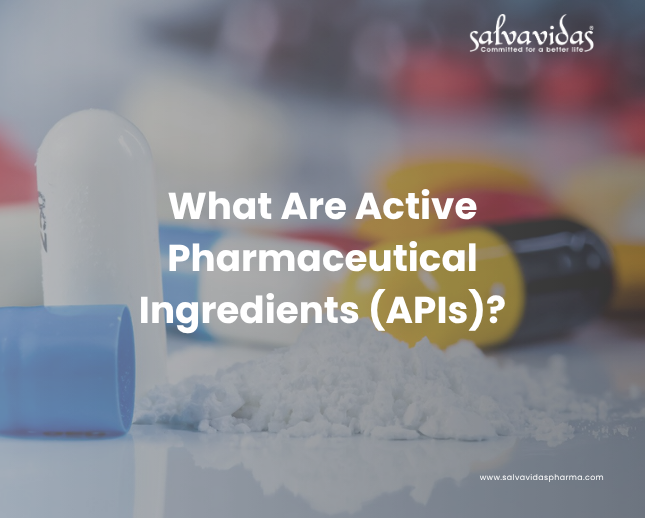
Behind every effective medication lies a powerful component known as the Active Pharmaceutical Ingredients (APIs). These ingredients are responsible for the therapeutic effect of a drug. From common pain relievers to advanced treatments for chronic illnesses, APIs form the core of the pharmaceutical world. If you are involved in the procurement, sourcing, or manufacturing of medicines, understanding how APIs work and what makes them reliable is essential. In this guide, we will cover everything you need to know about APIs, emphasizing their critical role in medicinal products and how to source them from trustworthy suppliers, especially when partnering with a Pharmaceutical Manufacturer in India known for quality and regulatory compliance. What is an API in Pharmaceuticals? Let’s start with the basics. What is an API in pharmaceuticals? In simple terms, an API (Active Pharmaceutical Ingredients) is the active component in a drug that delivers the intended therapeutic effect. While each medication also contains excipients substances that aid in absorption, stability, or taste they do not have any direct therapeutic impact and do not contribute to curing the condition. APIs are essentially the ingredients responsible for the drug’s effectiveness. For example, in a headache tablet, the API is the compound that relieves pain. The formulation may include other components that support drug delivery, improve ease of use, or extend shelf life, but these do not actively treat the patient. Why APIs Are the Backbone of Modern Medicine The pharmaceutical industry relies heavily on APIs to develop treatments for everything from the common cold to complex disease like cancer. Without high-quality APIs, no drug could function effectively – making them the core of any drug formulation. For pharmaceutical companies, using the right pharma raw materials is not just about maintaining quality; it’s also about ensuring patient safety, meeting regulatory standards, and building long-term trust with consumers. Inside the API Manufacturing Process Manufacturing an API is a complex, highly regulated process. The manufacturing process for Active Pharmaceutical Ingredients involves several critical steps – each carefully controlled to ensure a consistent, safe and effective product. Here’s a typical overview: Chemical Synthesis or Extraction – APIs are either chemically synthesized or extracted from biological sources. Purification – Impurities are removed to ensure the compound meets required purity standards. Crystallization or Isolation – The active compound is refined into a stable usable form. Testing and Validation – Every batch undergoes rigorous testing to ensure quality, potency and consistency. Packaging – Final products are sealed under sterile conditions to prevent contamination. Strict quality controls are enforced throughout the process, following international pharmaceutical standards. High-quality APIs, are manufactured in accordance with Good Manufacturing Practices (GMP), which ensure production efficiency, safety, and regulatory compliance across all segments. Types of API Products Available Today The range of API products available in the pharmaceutical market is broad and diverse, which can be categorized into the following types: Synthetic APIs – Produced through chemical synthesis; commonly used in generic and over-the-counter medications. Biotech APIs – Developed using biological processes; often used in specialized or targeted therapies. Highly Potent APIs (HPAPIs) – Extremely powerful compounds used in very small doses for treatments like chemotherapy. Selecting the appropriate type of API depends on several critical factors: the therapeutic goals of the drug, patient safety, the specific role of the API in achieving treatment outcomes, and the regulatory requirements that govern the pharmaceutical industry. These are key considerations that any reputable API manufacturer thoroughly evaluates before production. Why API Quality Should Never Be Compromised The quality of an API can determine the success or failure of a pharmaceutical product. Poor-quality APIs can lead to product recalls, safety risks, and major financial losses. That’s why it’s crucial for companies to partner with reliable pharmaceutical raw material suppliers who prioritize quality at every step. A trustworthy supplier will always provide complete documentation for each batch, including traceability, and quality certificates ensuring compliance with all required standards. This approach reflects the high manufacturing standards upheld by the Indian pharmaceutical industry on the global stage. How to Find a Trusted API Supplier in India India has emerged as a leading global hub for the production and export of Active Pharmaceutical Ingredients (APIs). If you’re searching for a reliable API supplier in India, here are key factors to consider: International Certifications – Look for compliance with GMP, WHO, USFDA, and other global regulatory standards. Testing and Documentation – Ensure the supplier provides complete lab reports, batch documentation, and regulatory certificates. Consistent Supply Chain – A reliable supplier should maintain steady delivery timelines to support uninterrupted production. Technical Support – Reputable suppliers also assist with regulatory compliance, both locally and internationally. Partnering with an experienced Indian API supplier offers access to cost-effective, high-quality API products backed by reputation for global reliability and compliance. India’s Influence on Global API Supply India has established as one of the world’s leading exporters of pharmaceutical raw materials. With its large-scale infrastructure, skilled workforce, and strong regulatory framework, Indian pharmaceutical companies now supply APIs to more than 150 countries. The consistent rise in pharmaceutical exports from India is driven by a commitment to quality and adherence to international compliance standards This steady growth has positioned India as a preferred choice for global buyers, offering unique combination of affordability, reliability and regulatory assurance. Tips for Buyers Looking to Source APIs If you’re planning to source APIs for manufacturing or trade, keep the following key tips in mind: Request a Certificate of Analysis for every batch. Ensure full traceability of raw materials throughout the supply chain Carefully review the purity levels and supporting documentation Evaluate delivery timelines and the supplier’s turnaround capabilities. Focus on building long-term partnerships, not just one-time transactions, when sourcing Active Pharmaceutical Ingredients. Partnering with reliable pharmaceutical raw material suppliers ensures consistent product quality even as you scale up production. Final Thoughts Active Pharmaceutical Ingredients (APIs) are more than just components—they’re the heartbeat of every pharmaceutical product. Understanding how they function and sourcing them responsibly is essential for anyone involved in the pharmaceutical supply
Popular Blog
Categories
Monthly Archives
- March 2026
- February 2026
- January 2026
- December 2025
- November 2025
- October 2025
- September 2025
- August 2025
- July 2025
- June 2025
- May 2025
- February 2025
- January 2025
- October 2024
- August 2024
- July 2023
- April 2023
- March 2023
- February 2023
- December 2022
- November 2022
- October 2022
- September 2022
- August 2022
0