
How Pharmaceutical R&D Supports API Process Development
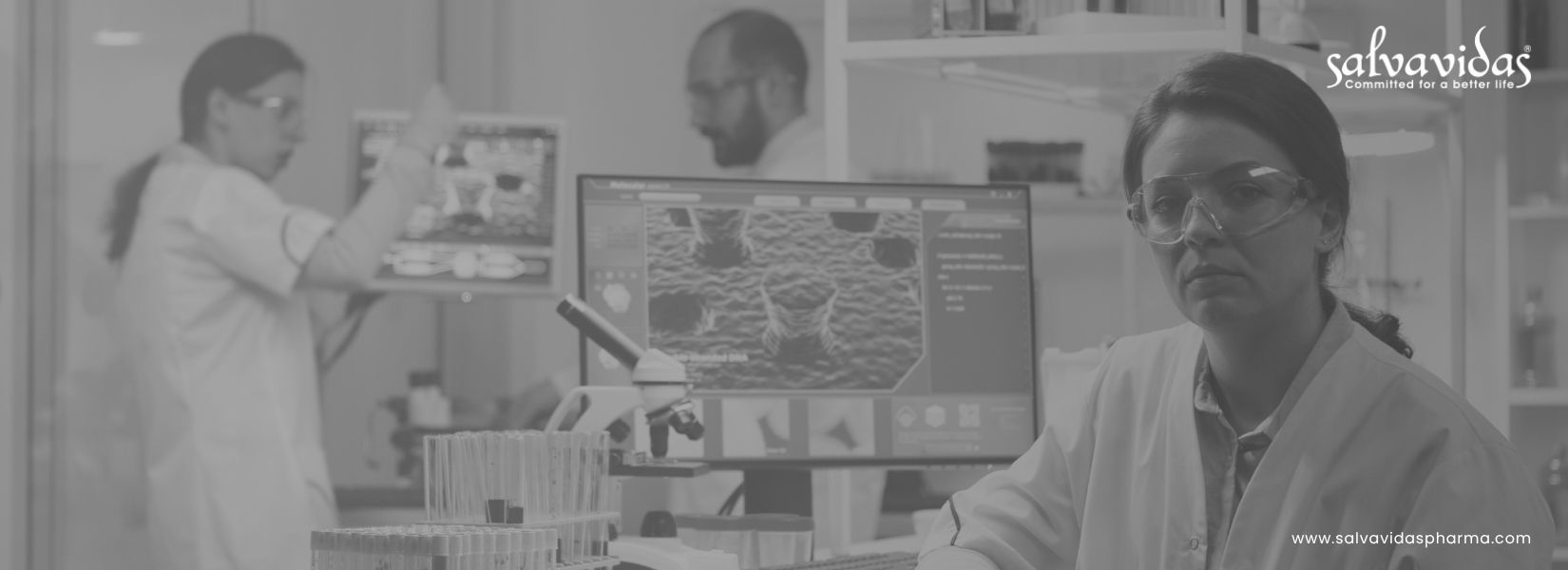
API process development is the work of turning a chemical reaction that works in a small flask into a safe, reliable, repeatable manufacturing process. Pharmaceutical R&D is what makes that transition possible. Without it, a promising molecule can fail at scale because of poor yield, difficult impurities, safety problems or inconsistent quality.
This guide explains the stages of API process development, the role of R&D teams, and what buyers and partners should expect from a supplier with real development capability.
Key Takeaways
- Process development turns a laboratory synthesis into a scalable, controlled manufacturing process.
- R&D covers route selection, optimisation, impurity understanding, analytical methods, scale-up and technology transfer.
- A good process is safe, reproducible, cost-effective and produces few difficult impurities.
- Strong documentation allows the process to be transferred and supports regulatory filings.
What Is API Process Development?
API process development is the stage between discovering or selecting a molecule and manufacturing it commercially. It defines the synthetic route, the conditions, the materials and the controls needed to make the API consistently at the required purity and scale. See how production works in the API manufacturing process.
Stages of API Process Development
1. Route scouting and selection
Chemists evaluate possible routes to the target molecule and compare them on safety, number of steps, availability and cost of materials, yield, and the impurities they create. Often the best route in a research paper is not the best route for manufacturing.
2. Laboratory optimisation
The chosen route is refined by adjusting temperature, solvents, reagents, times and workup. Structured experiments, often called design of experiments (DoE), help find robust operating ranges instead of a single fragile set of conditions.
3. Impurity profiling and control
Teams identify and study impurities, understand where they come from and decide how to control them. Regulators expect control of related substances, residual solvents, elemental impurities and mutagenic impurities, in line with ICH guidelines.
4. Analytical method development
Validated methods are needed to measure assay, impurities and other quality attributes. Good methods are developed alongside the process.
5. Physical form and particle properties
For many APIs, the crystal form (polymorph), particle size and bulk properties affect how the finished product performs, so crystallisation and drying are carefully developed.
6. Safety and environmental assessment
Reactions are reviewed for thermal hazards, reagent risks, waste and solvent use before they are scaled.
7. Scale-up
The process moves from lab scale to kilo-lab, pilot and finally commercial scale. Heat transfer, mixing and filtration behave differently in larger equipment, so conditions often need adjustment.
8. Technology transfer and validation
The process and its documentation are transferred to the manufacturing site, and validation shows that it consistently produces material meeting specifications.
Quality by Design Thinking
Modern development often follows quality by design principles, which means understanding how process parameters affect quality so that the process can be controlled, not just tested at the end. ICH guidance on pharmaceutical development and on drug substance development and manufacture describes this approach.
What Good R&D Delivers
- a documented process with defined parameters and ranges
- validated analytical methods
- an impurity profile and control strategy
- data on stability and physical properties
- scale-up and tech transfer documents
- information to support regulatory filings such as a DMF
Why It Matters to Buyers
A supplier with real process knowledge is more likely to deliver consistent batches, manage changes properly, troubleshoot problems and support new products. When evaluating a supplier, ask about their development capability and how they manage process changes. See how to evaluate a pharmaceutical API supplier.
R&D and Custom Synthesis at Salvavidas Pharma
Salvavidas Pharma is a WHO-GMP certified pharmaceutical manufacturer and exporter based in Surat, Gujarat, India. Learn more about our pharmaceutical R&D and custom synthesis services and pharmaceutical intermediates.
Frequently Asked Questions
What is the difference between R&D and process development?
R&D is the broader research activity. Process development is the part that creates a scalable manufacturing process for a chosen molecule.
How long does API process development take?
It depends on the molecule, complexity and scale. Simple processes may take months, and complex ones longer. Ask for a timeline in the project proposal.
Why do processes need to be optimised before scale-up?
Because conditions that work in small flasks may give lower yield, new impurities or safety issues in large reactors.
What is technology transfer?
It is the formal transfer of a developed process and its documentation to the site that will manufacture it at scale.
Need development or custom synthesis support? Contact our team.