
How Are Pharmaceutical APIs Manufactured?
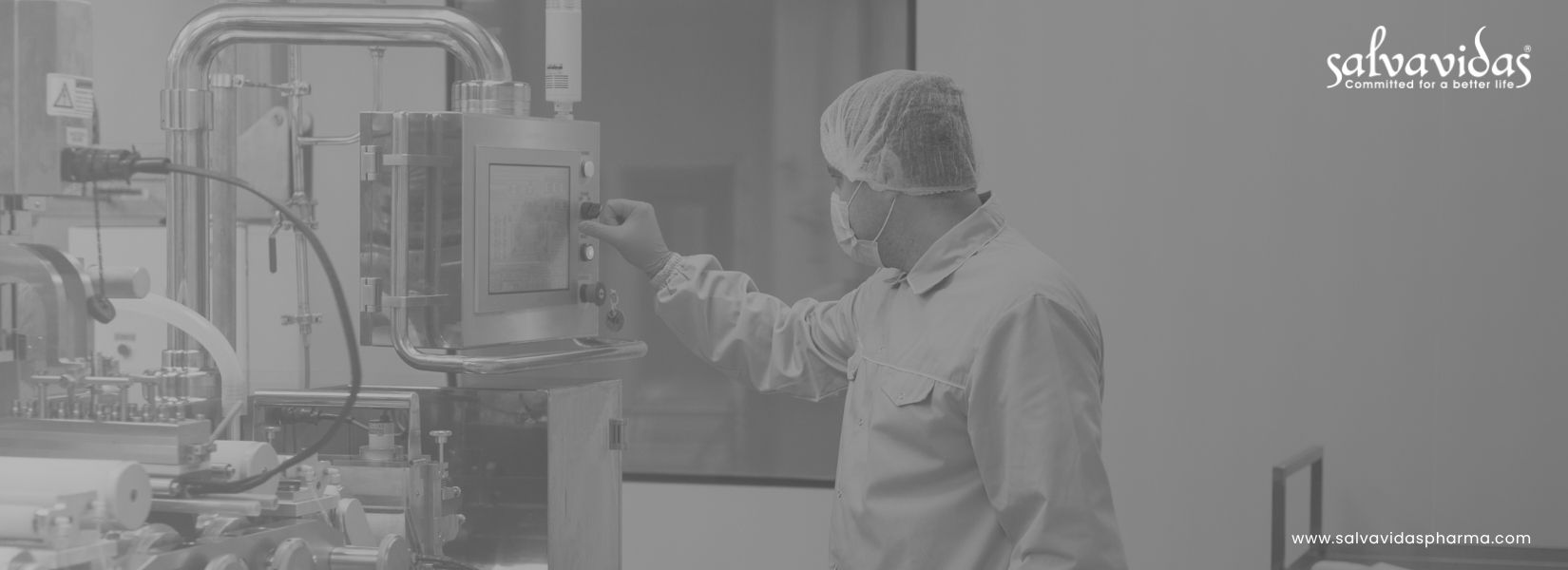
The API manufacturing process turns raw chemicals into a pure, tested active ingredient that can be used to make medicines. It is a multi-step operation that combines chemistry, engineering and strict quality control, and every stage affects the purity and consistency of the final product.
This guide walks through the main stages of API manufacturing, the controls at each step, and the points buyers should understand when evaluating a supplier.
Key Takeaways
- Most synthetic APIs are made in several chemical steps, through intermediates, then isolated, purified, dried and tested.
- GMP expectations for APIs (ICH Q7) apply from the API starting material onward.
- Impurities, residual solvents and physical properties are controlled at every stage.
- Process knowledge, not just equipment, is what gives batch-to-batch consistency.
Overview of the Process
For a typical synthetic API, the flow looks like this:
- Process design and route selection
- Raw material and starting material qualification
- Chemical synthesis through intermediates
- Isolation and purification
- Drying and size reduction
- Quality control testing
- Packaging, labelling and release
Step 1: Process Design and Route Selection
Before production, chemists choose a synthetic route, meaning the sequence of reactions that leads to the API. A good route is safe, reproducible, cost-effective and produces few difficult impurities. This work is done in pharmaceutical R&D and process development.
Step 2: Raw Materials and Starting Materials
Manufacturers qualify the suppliers of raw materials, solvents and starting materials, and test incoming materials against specifications. The API starting material is the point from which GMP expectations for API manufacturing formally apply, as set out in ICH Q7 and agreed with regulators.
Step 3: Chemical Synthesis
Reactions are carried out in reactors under controlled temperature, pressure, time and mixing. Each stage produces an intermediate that may be tested before moving on. In-process checks confirm that a reaction is complete and that key impurities are within limits. Learn more about pharmaceutical intermediates.
Step 4: Isolation and Purification
After the final reaction, the API is separated from the reaction mixture. Common techniques include:
- crystallisation to form a pure solid
- filtration and washing to remove impurities and solvents
- extraction or chromatography where needed
Crystallisation conditions also affect the physical form of the API, such as its crystal form (polymorph) and particle shape.
Step 5: Drying and Size Reduction
The wet solid is dried to reduce solvents and moisture to the specified limits. Some APIs are then milled or micronised to reach a target particle size, which can affect how the finished tablet dissolves.
Step 6: Quality Control Testing
A quality control laboratory tests the API against its specification. Typical tests include:
- assay (strength) and identification
- related substances (impurities)
- residual solvents
- water content
- physical tests such as particle size and appearance
- microbial limits, where required
Results are recorded on the Certificate of Analysis. See what a CoA is.
Step 7: Packaging and Release
The approved API is packed in suitable containers, labelled and stored under defined conditions. The quality unit reviews batch records and test results before releasing the batch.
Controls That Run Through the Whole Process
- GMP and quality systems: documentation, change control, deviation handling and data integrity. See GMP in pharmaceutical manufacturing.
- Cross-contamination control: especially important for potent products. See HPAPI manufacturing.
- Process validation: showing that the process consistently gives an API that meets specification.
- Stability studies: confirming how long the API stays within specification.
Other Types of API Manufacturing
Not all APIs are made by chemical synthesis. Fermentation-derived APIs use microorganisms, plant-derived APIs are extracted and purified from plants, and biological APIs are produced in living cells. Each follows a different process but the same quality principles.
What Buyers Should Take Away
When evaluating a supplier, ask who runs each step, where the API starting material comes from, how impurities are controlled and what data supports consistency. See how to evaluate a pharmaceutical API supplier.
Frequently Asked Questions
How long does API manufacturing take?
It depends on the number of synthetic steps, the scale and the testing required. Some processes take days, others weeks. Ask your supplier for typical lead times.
What is the most important stage?
No single stage works alone. Consistency depends on controlling the whole process, but isolation, purification and quality control are especially critical for purity.
What does GMP require for APIs?
ICH Q7 sets out GMP expectations from the API starting material onward, including quality management, documentation, equipment, production controls and laboratory controls.
Why are some APIs more complex to make?
More reaction steps, sensitive chemistry, difficult impurities and safety requirements all add complexity, as with many oncology APIs.
Looking for a reliable API supplier?
See our API products or contact our export team.